Published 29/05/2017
Water quality investigations making progress
Investigations into possible causes and consequences of the recent detection of bacteria in aquifer water supplied to Lower Hutt and Wellington are now well under way.
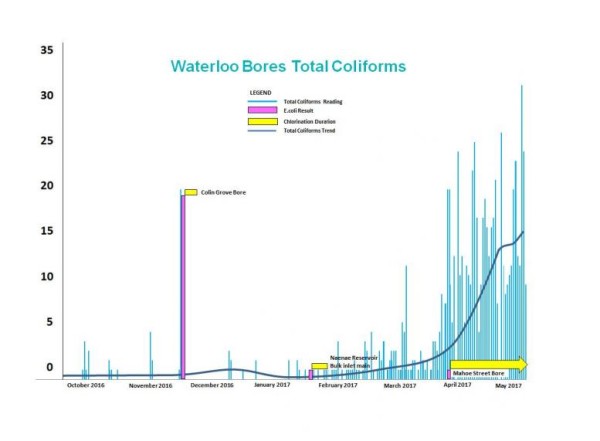
In mid-April Wellington Water recorded the third positive E. coli result from aquifer water in five months. In consultation with Regional Public Health, the decision was made to add chlorine to the water supplied to Lower Hutt, and to turn off the public taps at Buick Street and Dowse Square.
About half of all the water supplied to urban Wellington’s 400,000 people comes from the Waiwhetu Aquifer, which extends under the Hutt Valley and beneath Wellington Harbour. Aquifer water sent to Wellington city has always been chlorinated.
Wellington Water had been tracking an unprecedented increase in bacterial activity in the water taken from the aquifer since February, said the Group Manager of Network Strategy and Planning, Mark Kinvig. “In addition to finding E. coli there has been a general increase in detection of total coliform bacteria, which we have not previously seen.
“One of the lessons from what happened in Havelock North is that we cannot ignore signals from our water sources. When it comes to public health, we’re not going to take any chances.”
There are four broad areas of investigation in progress to help provide some answers into what might have caused the increased activity, and what are the next steps:
- Possible sources of contamination at the borefield
- Supply options in the event that the borefield was closed
- Possible influences on the wider borefield area
- Treatment options to ensure the safety of the drinking water
Investigations into possible sources of contamination are focusing on the security of the bores which draw water from the aquifer. The bore casings descend some 30 metres below ground level into the aquifer, so the casing seals and boreheads at the surface are being tested to ensure they are not leaking. This work is set to be complete in mid-June, after which decisions on long term treatment requirements can be made.
Wellington Water is also looking at other underground pipework in the vicinity of the borefield, and helping scientists from Greater Wellington Regional Council carry out wider investigations into potential sources of contamination for the aquifer.
A non-chlorine option for the public taps at Buick Street and Dowse Square is part of the treatment investigations, along with treatment options for the Lower Hutt reticulated supply if permanent treatment is recommended.
Check out our FAQ's for more information.