
Waterloo Wells Replacement Project, Lower Hutt
We're preparing to install a new well at Ludlam Park (near the Ludlam Crescent & Massey Avenue intersection), Lower Hutt to improve regional water supply resilience
If you have any questions about this work, please contact:
Wellington Water, 04 912 4400
Latest Updates
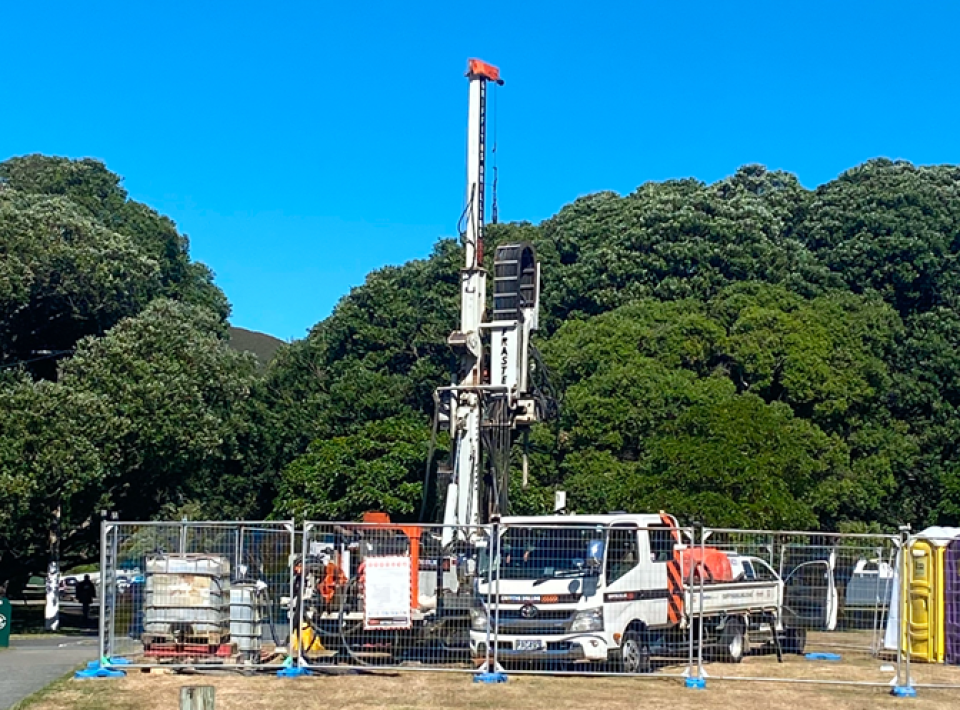
Wellington Water is about to start drilling a water bore at Ludlam Park. This is the first phase of a project to install a new well at Ludlam Park. This will help ensure we continue to receive a reliable supply of water for the region.
Wellington Water, on behalf of Greater Wellington, is installing a new water well in Ludlam Park, in Woburn, Lower Hutt to improve regional water supply resilience. See our 2025 media release for more details.
The first phase of construction is expected to start in June/July 2026 at Ludlam Park, and involves drilling and a range of other activities to fully understand the quality and volume of water coming up from the Waiwhetū Aquifer. This helps us design the new well at this location.
The second and main construction phase takes place in 2027 when we connect the new well to the water network. This will involve installing an enclosure over the top of the well at Ludlam Park as well as installing a new pipe along Penrose Street and connecting it to the collector pipework that runs along Knights Road (which connects to the Waterloo Water Treatment Plant).
We'll keep you posted on progress as construction progresses.
Overview
The Waiwhetu Aquifer, located below Wellington’s Harbour and Lower Hutt, is a critical source of water for the Wellington region.
We rely on eight water supply wells to bring this water up to the network and into people’s homes and businesses. These wells are ageing and vulnerable to natural events, including earthquakes, tsunamis, flooding, sea level rise, and saline (seawater) intrusion.
To provide extra resilience, we are installing one additional water well in Ludlam Park, Lower Hutt.
Background
The Gear Island and Waterloo wells in Lower Hutt provide approximately 40% of the average annual water supply to the Wellington Region and up to 80% in peak summer periods.
The existing infrastructure is vulnerable to natural events including earthquakes, tsunamis, flooding, sea level rise and saline intrusion. The condition of some of the existing well casings is currently unknown. The Gear Island wells are estimated to be between 40-50 years old, and the Waterloo wells 30-40 years old. These are nearing the end of their design life of 50 years.
Figure 1 shows the location of existing Knights Road water supply bores circled in yellow and Gear Island bores circled in red. The associated water treatment plants are shown as blue boxes, and the project area is circled in orange.

Figure 1. Project location and existing water supply bores
The Waterloo well extraction network is situated along Knights Road, consisting of eight water supply wells that flow into the Waterloo Water Treatment Plant. An additional three water supply wells (used when required) are in Petone’s foreshore and flow into the Gear Island Water Treatment Plant.
We’ve setup a project to develop and implement replacement wells for the Waterloo treatment plant water supply wells to improve the resilience of this crucial water supply asset and enhance our understanding of the Waiwhetu Aquifer.
New water wells to improve resilience, rather than increase amount of water sourced
It’s important to note that any confirmed additional well will not increase the amount of water sourced from the Aquifer, rather it increases overall resilience. To explain this, in normal operations we currently have eight wells operating at maximum capacity during the peak summer period (when water demand is at its highest annually).
By increasing the number of wells we use, we can spread the load, allowing all nine wells to operate at a more sustainable level (i.e. around 80%). This is known in the industry as having greater “redundancy”, or in other words, we’ll have a more resilience and reliable regional water supply.
Frequently Asked Questions
Why are we doing this work?
-
On behalf of Greater Wellington Regional Council, Wellington Water is improving the resilience of Wellington’s drinking water network by investigating possible locations for an additional water well in Lower Hutt. The investigations provide valuable insight to help determine the suitability of the proposed location(s) of the new well. This involves shortlisting suitable locations, and completing investigations (for example: drilling and pumping water from the aquifer) to determine what area we recommend putting a new well.
-
These investigations are now complete, and we’re now in the process of compiling the data. We can now confirm that Ludlam Park has been chosen as the location to install an additional well.
-
The project purpose is to develop and implement replacement wells for the Waterloo water supply wellfield to improve the resilience of this crucial water supply asset that supplies much of the Hutt and Wellington City drinking water supply.
Why is it important?
-
The Waiwhetū Aquifer, located beneath Wellington’s Harbour and Lower Hutt, provides 40% of the average annual water supply to the Wellington region, and up to as much as 80% during the peak summer period.
-
The existing infrastructure is aging and vulnerable to natural events. If additional wells are not installed, or the existing ones not replaced, we face an increased risk of water shortages in the future.
Why are we installing a new well, don’t we have enough already?
-
There are eight water wells along Knights Road, Lower Hutt that bring up water from the Waiwhetū Aquifer to our homes and businesses across the Wellington, Porirua and Hutt Valley region.
-
During the summer period, when regional demand for water peaks, our eight existing wells are operating at 100% capacity. Having an additional well allows us to spread the load.
-
Having an additional well doesn’t mean we are taking more water from the aquifer, it means we are putting less pressure on the existing wells, which are old.
-
Additional wells put us in a better position to support local growth (for example: Population growth). With the population continuing to grow regionally, we need continued investment in bulk water supply.
-
Ludlam Park has been chosen as the location for an additional well, with early construction starting in 2026.
How many new wells are you installing?
At this point, only one additional new well has been approved, with the first phase of construction starting in 2026.
Over the long term, the existing wells are approaching the end of the serviceable life and need to be replaced.
Will this new well impact the amount of water we receive?
-
This project will design, develop, and implement a programme to replace the existing wells with resilient new well(s). It will not result in any additional water being drawn from the aquifer but will dramatically improve the resilience of the infrastructure.
Who is leading this project?
Wellington Water are investigating possible well locations on behalf of Greater Wellington Regional Council (GWRC). GWRC are funding the project, as they are responsible for bulk water assets. Hutt City Council own the land where the new well will be located (Ludlam Park).
Will we be looking to install even more wells, beyond the additional one we’re currently working on?
Yes, in the long term we are going to have to look into installing more wells. There are a variety of reasons for this. The current wells are ageing and in need of replacement over the next 10-15 years plus.
Population growth is another key driver, which is continually increasing the demand for water. Over the long term, this will create a need for additional wells to match this demand. We will need new wells so that we continue to provide reliable water supply for the region.
What are other things you took into account when assessing suitable locations?
In addition to the above, we also took into account the following:
-
The need for an above ground headworks in accordance with Tuamata Arowai’s Drinking Water Quality Assurance Rules
-
Proximity to houses/other land uses
-
Achievability
-
Constructability
-
Accessibility
-
Consenting requirements
-
Landowner types
-
Affordability
All Updates
Here is everything you need to know:
What’s happening?
The initial phase of works involves operating drill rigs, mobile cranes, pumps, and settlement tanks.
This will take place at the corner of Massey Avenue, Ludlam Crescent, and Penrose Street, within
Ludlam Park (see above image). Griffiths and Richardson Drilling crews are completing the
construction work on the ground.
When will this occur and what’s the impact?
We will start setting up the construction site in early June, using a digger to get the land ready and
putting up fencing around the area. Drilling is expected to start in mid-June taking around 5 days to
complete (indicative). This will generate noise and vibration. The drilling is only taking place during
standard working hours, Monday to Friday 8am-5pm.
Once drilling is finished, we will complete a range of activities including cleaning and conditioning
the well, and measuring water flow to fully understand the quality and volume of water coming up
from the Waiwhetū Aquifer. This helps us design the well. This activity will take place 24 hours per
day and is scheduled to be completed by mid-August. During this period, you will notice crews
continually operating and inspecting equipment, temporary hoses running down Massey Avenue
and some traffic control measures.

Traffic management and parking restrictions
• Parking restrictions within Ludlam Park (see image at top of first page)
• Massey Avenue, which runs through Ludlam Park, will be closed and a stop-go sign will be in
place along Manuka Avenue, while well testing takes place.
• Parking and speed restrictions will be in place close to the site.
• The site will be securely fenced off, which does mean that the pedestrian walkway will be
temporarily closed (see the green area in the first image).
Why is this work so important?
Wellington Water, on behalf of Greater Wellington Regional Council, is working on a long-term,
strategic project to improve the resilience of Wellington’s drinking water network. This involves
planning for the replacement of existing wells, and installing additional wells, in the Waterloo water
supply wellfield. These wells bring water up from the Waiwhetū Aquifer, providing water for the
Hutt and Wellington City.
The Waiwhetū Aquifer, located beneath Wellington’s Harbour and Lower Hutt, provides 40% of the
average annual water supply to the Wellington region, and up to as much as 80% during the peak
summer period.
The existing infrastructure – the eight wells located in the Lower Hutt Valley which source water
from the Waiwhetū Aquifer – are aging (30-40 years old) and vulnerable to natural events. If
additional wells are not installed, or the existing ones not replaced, we face an increased risk of
water shortages in the future.
Following on from information sent in a letterbox drop in May 2025, Ludlam Park has been identified
as a suitable location to install an additional well following extensive analysis.