Bulk Water Cross Connection Project, Lower Hutt
We are closing bulk water cross connections in Lower Hutt in late 2026. In preparation, we are installing water pressure booster pumps at four Lower Hutt locations and preparing public communications.
If you have any questions about this work, please contact:
Tiaki Wai, 0800 TIAKI WAI (0800 842 549)
Latest Updates
We're currently midway through construction installing booster pumps at four Lower Hutt locations ahead of the cross-connection closure
Preparations in progress
We are planning for the closure of bulk water cross connections that feed into the Lower Hutt drinking water supply. We expect this to take place in late 2026.
This network change will impact water pressure, so we are installing pressure booster pumps at four Lower Hutt locations, and preparing public comms.
We expect that most residents will not notice a change in water pressure in their homes.
This project will strengthen drinking water safety, compliance and resilience for properties supplied from the Waterloo Water Treatment Plant by permanently closing a bulk water cross connections to the local water supply in Lower Hutt, facilitated by installing water pressure booster pumps where required.
The project will:
- Help ensure around 800 properties supplied from the Waterloo Water Treatment Plant meet current Taumata Arowai drinking water requirements.
- Ensure treated water follows the intended treatment and storage pathway before entering the distribution network.
- Provide greater opportunity to identify and respond to treatment or water quality issues before water reaches customers.
- Reduce the risk of non-compliant water entering the network by ensuring water passes through the intended treatment and storage processes.
- Maintain appropriate water pressure for higher elevated properties through the installation of pressure booster pumps where required.
I don't understand, how does this work make sure you comply with Taumata Arowai drinking water compliance requirements?
Closing the bulk water cross connections will help ensure drinking water supplied to around 800 properties meets current Taumata Arowai drinking water requirements and further reduces the risk of contamination.
Current drinking water regulations require treated water supplies to achieve a higher level of chlorine disinfection than was required under the previous regulatory framework.
Chlorine plays an important role in the treatment process by inactivating harmful microorganisms, including bacteria and viruses, helping ensure water remains safe to drink as it travels through the distribution network.
While the water currently supplied to these properties is considered safe to drink and the public health risk is low, the supply does not fully meet current regulatory requirements.
Ok great, but I still don't understand why this work is needed.
Currently, around 800 properties supplied from the Waterloo Water Treatment Plant do not fully meet Taumata Arowai's current chlorine disinfection requirements.
While the public health risk is considered low and the water remains safe to drink, Tiaki Wai is committed to completing upgrades as quickly as practicable so the affected properties comply with current drinking water standards.
To achieve this, bulk water cross connections to the local water supply distribution network downstream of the Waterloo Water Treatment Plant needs to be permanently closed.
Closing the cross connections will ensure treated water remains within the intended treatment and storage pathway before entering the distribution network. This will help ensure the required level of chlorine disinfection is achieved and provide greater opportunity to identify and respond to treatment or water quality issues before water reaches customers.
Why did these cross connections exist in the first place
These cross connections are a deliberately constructed connection between the bulk water system and the local distribution network. In the past, they have provided operational flexibility (helping manage through pipe bursts etc. by allowing water to be supplied by a different route etc. and keeping water supplied to the community), helping support network water pressure needs and enabled the water to enter the local network directly, rather than first passing through reservoirs.
However, it is best practice to keep water on the intended pathway (via reservoirs, rather than direct into the local distribution network from the bulk water pipe). This supports better water quality outcomes, chlorine contact time and a stable, more resilient water network.
When are you planning on closing these cross connections?
We are working towards closing these cross connections by the end of 2026. We will keep you updated on the exact timeframe once confirmed.
We are in the process of installing water pressure booster pumps at selected locations ahead of this change, and preparing public comms.
Will the closure of these cross connections impact me?
Modelling and trials confirm that closing the cross connection will reduce water pressure in some parts of the network. To maintain appropriate levels of service and continue meeting drinking water standards, pressure booster pumps will be required in some locations.
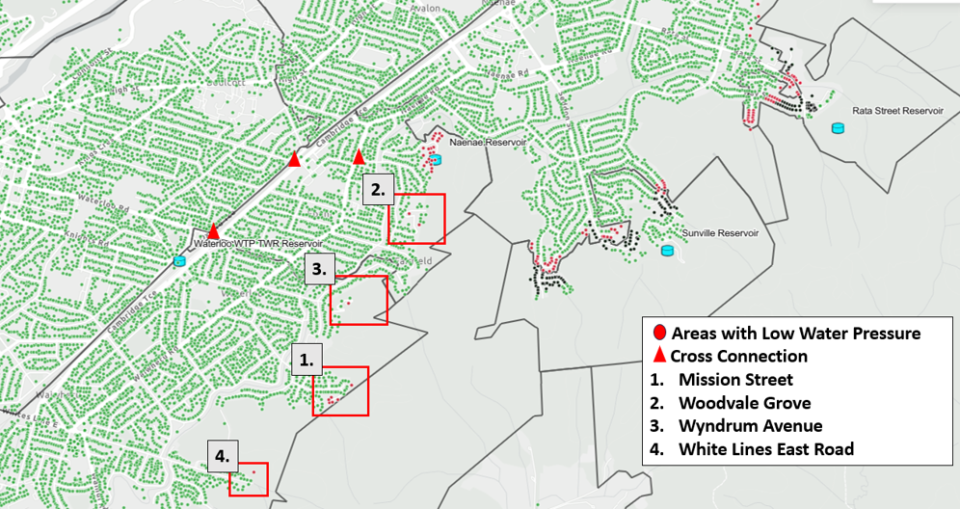
Modelling and trial closures indicate pressure boosters are required in the following locations:
- Mission Street, Waterloo
- Woodvale Grove, Fairfield
- Wyndrum Avenue, Waterloo
- Whites Line East, Waiwhetū
These pressure boosters will help maintain appropriate water pressure while enabling permanent closure of the cross connection.
These pressure boosters will be installed on council owned berms in the above residential areas.
We're expecting that most residents will not notice a change in water pressure in their homes. The water pressure will remain above minimum standards.
What do you mean by chlorine contact time and why is it important?
Chlorine is a disinfectant (helping kill germs so water remains safe to drink). To be fully effective it needs be at the right concentration level and have enough time mixed in with water.
Effective disinfection is achieved either by having higher concertation of chlorine (within recommended levels, i.e. higher concentration for a shorter time) or a longer contact time, with the same or lower levels of chlorine.
By closing the cross connections, we will make sure that the treated water is directed to local communities via reservoirs. This increases the time available for chlorine to do its job, supporting safe, healthy drinking water.
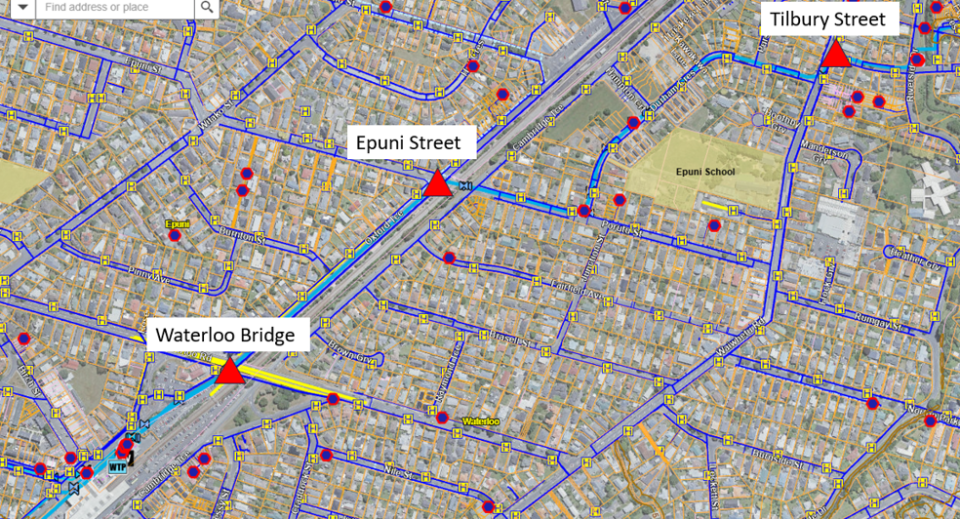
The location of the bulk water cross connections
Where we are installing pump boosters - the four locations
All Updates
Construction is in progress to install four pump boosters on council owned land at the four locations across Lower Hutt - Woodvale Grove, Mission Street, Whites Line East and Wyndrum Avenue.
We expect the new pumps to be installed within the next couple of weeks. This will ensure that water pressure remains as it currently is in these locations, after we close the bulk water cross connections.
A big thanks to residents for your understanding while we work in this network upgrade.