Stormwater
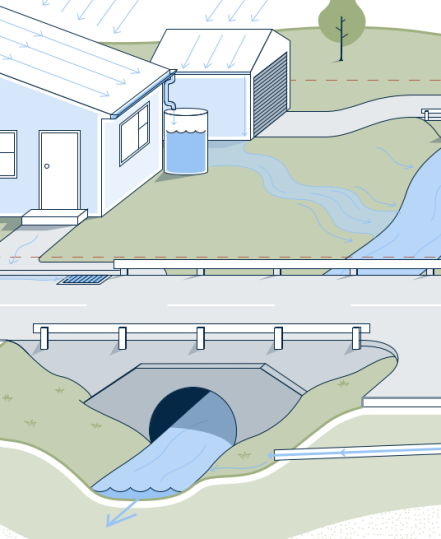
Rain landing on hard surfaces such as roads, roofs, concrete driveways, carparks or any built-up surface, creates runoff that can’t soak naturally into the ground.
Stormwater network
What is stormwater?
Rain pools and puddles on hard, built-up surfaces like roads, roofs, concrete driveways and footpaths in developed and urban areas. The runoff accumulates where it can’t soak naturally into the ground, creating stormwater.
Our stormwater network is designed to collect and convey stormwater away from our urban areas and into the natural environment.
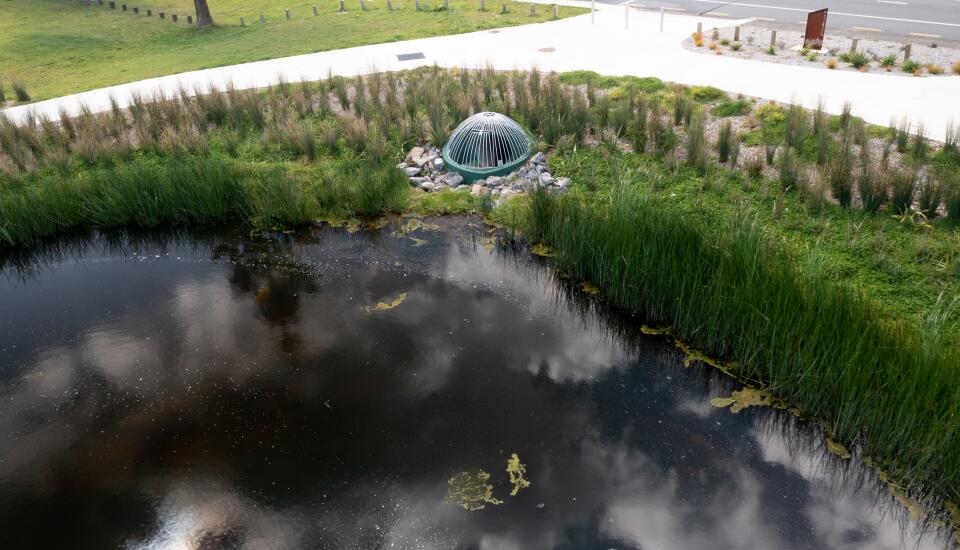
The stormwater network captures the runoff and directs it through drains, pipes, culverts, channels and into retention and infiltration ponds or other built infrastructure, conveying it to the natural environment of streams, rivers, and the harbour in a controlled way.
The stormwater network helps disperse stormwater into the ground which slows down flow, helping to minimise land erosion and support the natural water cycle.
Managing stormwater across our region
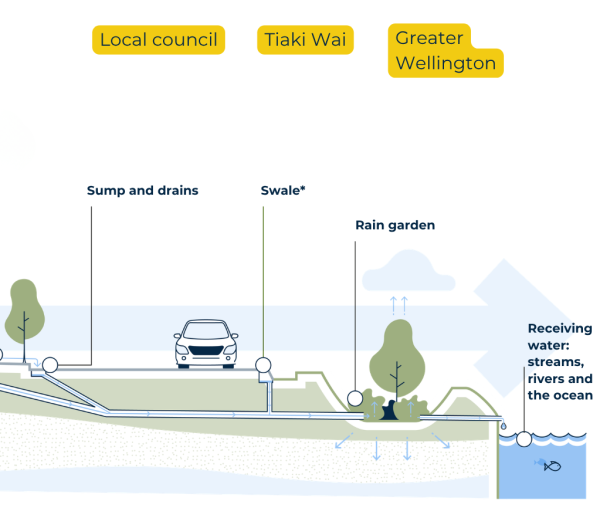
The stormwater system is typically made up of three parts: the network of hard assets, green infrastructure and natural features.
Hard assets include pipes, drains, catch pits / sumps, culverts, channels and other built infrastructure forming the basis of the network. Green infrastructure are ponds, swales, rain gardens, and wetlands. Natural features include streams, watercourses and overland flow paths.
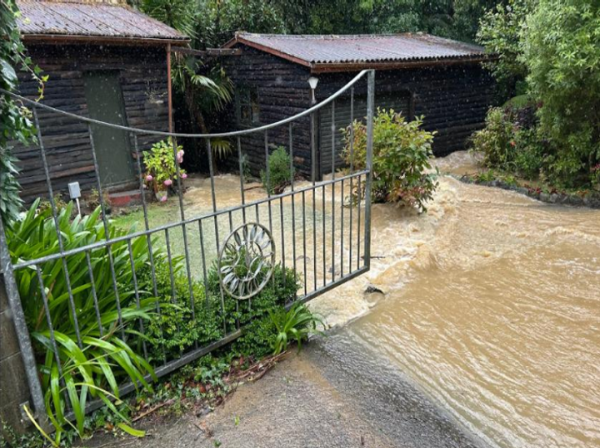
Our region's stormwater system is designed to manage normal rainfall and the more common storm events. During extreme rainfall, it is normal or expected for stormwater to flow across the land via natural overland flow paths, this is a critical part of the stormwater system. Flooding typically occurs when the system is overwhelmed and overland flow paths are obstructed.
Who maintains the stormwater system?
Management of the stormwater system is a shared responsibility between private property owners, local Councils, Greater Wellington and Tiaki Wai.
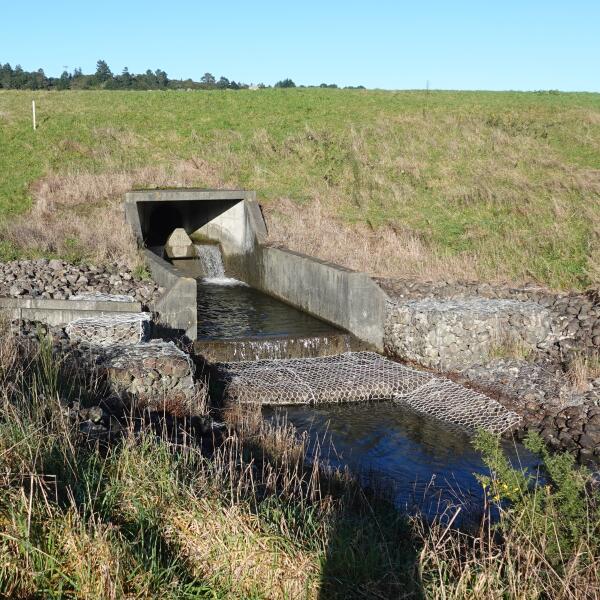
Tiaki Wai is responsible for managing the piped network assets – such as stormwater pipes, channels, intakes, and outlets.
Local councils are responsible for road/kerbside drains, sumps, and culverts beneath roads with NZTA/Waka Kotahi responsible where the road is a state highway.
Greater Wellington Regional Council manages our rivers and major streams.
Protect yourself from floods
Most of our stormwater network was designed and built years ago to manage normal rainfall and the more common storm events. Many heavy rain events now can easily exceed that and be highly localised – swamping the network and causing flooding.
Heavy rain can overwhelm the stormwater and wastewater networks in a matter of moments. There are some things residents can do to protect their property and reduce the risk of flooding on their property.
Reducing pollution
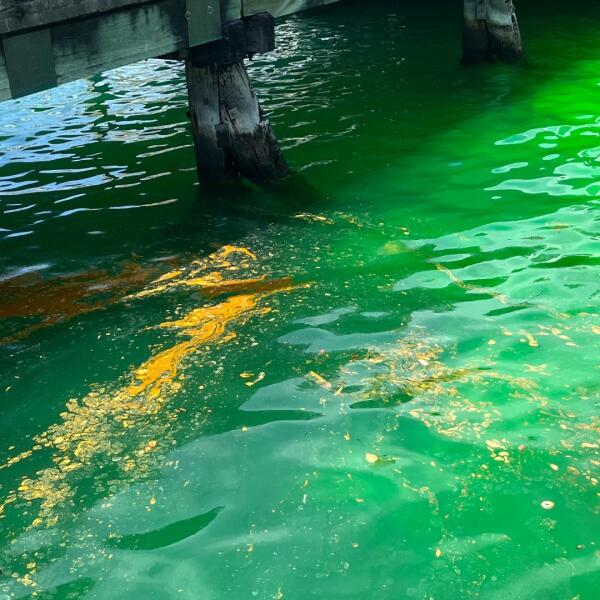
All stormwater ends up in our waterways and harbours, so everyone is responsible for reducing pollution getting into our stormwater system.
If you see pollution or an environmental incident, please urgently call the Greater Wellington 24 hour incident hotline 0800 496 734 or email: info@gw.govt.nz. The sooner they know about the incident the more likely it is they can find the source of the pollution or incident.
You can help protect our harbours, rivers and streams by reducing pollution into the stormwater network. You can do your part by:
- Washing your car on the grass
- Picking up dog poo and throw it in the bin
- Fixing car leaks
- Not pouring hazardous substances into household or stormwater drains.
Stormwater service zones
Stormwater service zones are the basis for charging for stormwater services on your water services bill.
The region is typically divided into urban and rural stormwater service zones.
Stormwater charges are not connection‑based under the inherited council approach. For 2025/26, stormwater charges apply if your property is in an urban stormwater service zone.
Urban stormwater service zones include built-up areas where properties are connected to, or benefit from, public stormwater infrastructure such as pipes, drains and pump stations.
Charges help fund the costs of operating, maintaining and renewing this infrastructure in the catchment, to make sure it continues to protect communities and property from stormwater impacts.
Rural stormwater service zones cover areas that do not receive the same level of urban stormwater services.
Physical connection, private stormwater systems, or resource consents do not affect charging this year.
The stormwater charging will be reviewed in the upcoming Water Services Strategy going out for consultation in March.