Trade waste
Trade waste is liquid waste from commercial or industrial activities that flows into our public wastewater network and through our wastewater treatment plants.
Businesses need a consent to discharge trade waste. This page provides details of how to apply for a consent.
Fats, oils, and chemicals from restaurants, laundromats, service stations, and workshops can all make their way into the wastewater network and damage and block pipes, causing wastewater overflows.
Managing this waste is crucial to keep our environment clean, protect public health, and maintain the infrastructure we all rely on.
At Tiaki Wai, we’re here to make sure trade waste is managed in a way that keeps our environment safe.
Transition to Tiaki Wai
For businesses with trade waste consents or monitored discharges:
- Councils have delegated the administration and enforcement of trade waste to Tiaki Wai from 1 July 2026 but there are no significant changes to the management of trade waste.
- Councils will continue to invoice for trade waste fees and charges on behalf of Tiaki Wai for an interim period.
Over the next 12 months, Tiaki Wai will gradually align inspections and processes across council areas, making things simpler and more consistent for businesses. Businesses will be kept up to date as this work progresses.
Contacting our trade waste team
If you’re in Lower Hutt or Upper Hutt, the trade waste team has moved to Tiaki Wai. Contact the team at tradewaste@tiakiwai.co.nz.
Our approach
At Tiaki Wai we're committed to:
1. Helping businesses do the right thing: We work with businesses to raise awareness about the impact of improper waste disposal. Our educational resources, multilingual guides, and training sessions help businesses understand the best ways to manage their waste.
2. Keeping an eye on things: Regular inspections and monitoring help us ensure businesses are following the rules set out in the city council's Trade Waste Bylaws. We check grease traps, take water samples, and work to prevent nasty surprises like sewer blockages and overflows—especially near our beautiful harbours.
3. Taking action when needed: If a business isn’t meeting the standards, we’re here to guide them on how to improve. When necessary, we enforce penalties to ensure compliance. This balanced approach has reduced non-compliance, helping to protect our environment and reduce costs for ratepayers.
Our goal is simple: protect Wellington’s waterways, reduce the risk of sewer issues, and support a sustainable future for our communities.
Environmental heroes
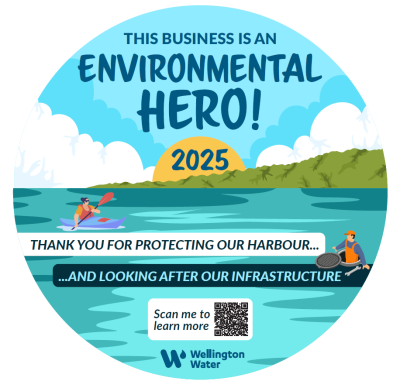 We recognise local businesses doing their bit to manage their trade waste. If a business meets the below criteria, we celebrate their efforts in keeping the environment clean, protecting public health, and helping maintain the infrastructure we all rely on.
If you see the environmental hero sticker you know a business in doing their bit. This will be checked every year and updated.
Environmental hero criteria -
- Grease trap must be fit for purpose and in working order.
- Grease trap must be cleaned by council approved contractor with a service contract.
- Run your tap for 10 minutes after the clean to refill your grease trap with cold water.
- Grease trap must not be a risk for storm water contamination.
- If using a grease convertor, it must be dosed with one of the approved enzyme products on a daily basis.
- Waste oil recycling drum (if applicable) must be either bunded or sitting on a tray to prevent spillages into stormwater.
- For mechanical grease trap owners, the double mesh sink screen must be in place to stop excessive amount of solids getting in the drain.
- All food scraps must be put into food scrap bin or rubbish bins before rinsing.
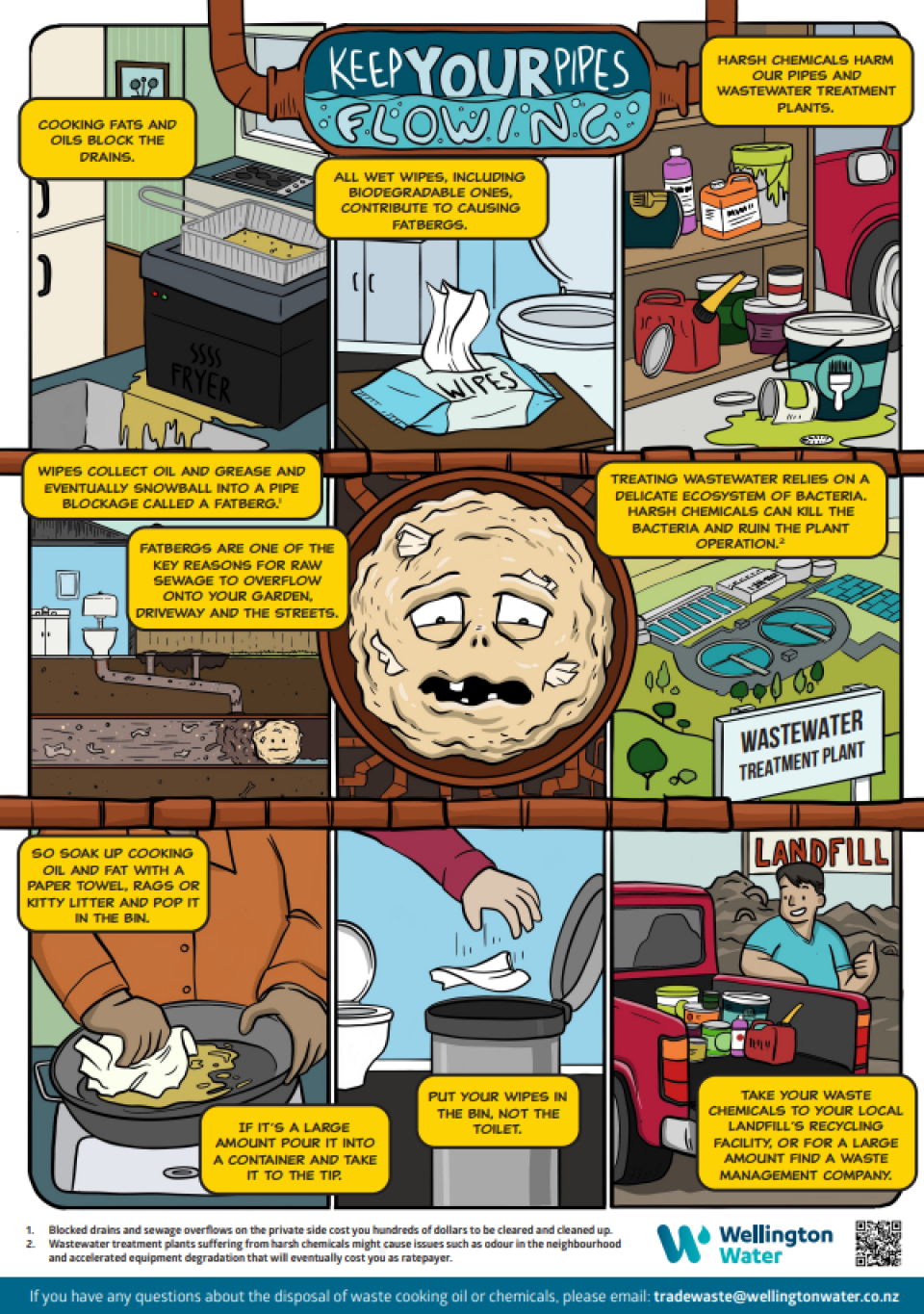
While trade waste comes from businesses, there are things we do at home that can block up our pipes too. When we flush things we shouldn't down the toilet, or pour oil down the drain, they can create fatbergs.
Fatbergs are large, solid masses that form in wastewater pipes when fats, oils, grease, and non-flushable items combine. They cause serious blockages and can lead to sewer overflows. Here’s what you can do at home to help prevent them:
Dos
-
Wipe greasy pots, pans, and dishes with a paper towel before washing.
-
Pour cooled fats and oils into a container, then dispose of it in the rubbish bin.
-
Use a sink strainer to catch food scraps and dispose of them in the compost or bin.
-
Dispose of wet wipes, sanitary products, and nappies in the rubbish, not down the toilet.
-
Educate your household about what can and can’t go down the drain.
Don'ts
-
Pour cooking oil, fat, or grease down the sink or toilet.
-
Flush wet wipes, even if they’re labeled ‘flushable’.
-
Put food scraps, coffee grounds, or tea leaves down the drain.
-
Rinse greasy pans with hot water, thinking it will wash the grease away—it just moves the problem further down the pipes.
We're all about managing the network and keeping everything running as it should be. Our trade waste team loves having a korero about the network and simple ways to keep it flowing.
If you'd like to arrange a visit for your school, get in touch with TradeWaste@tiakiwai.co.nz and we may be able to organise a visit.
Keep Your Pipes Flowing Posters
If you want to be creative while also learning about what you can do to keep the network flowing, download and print the below colouring in poster and get colouring.