Stormwater responsibilites
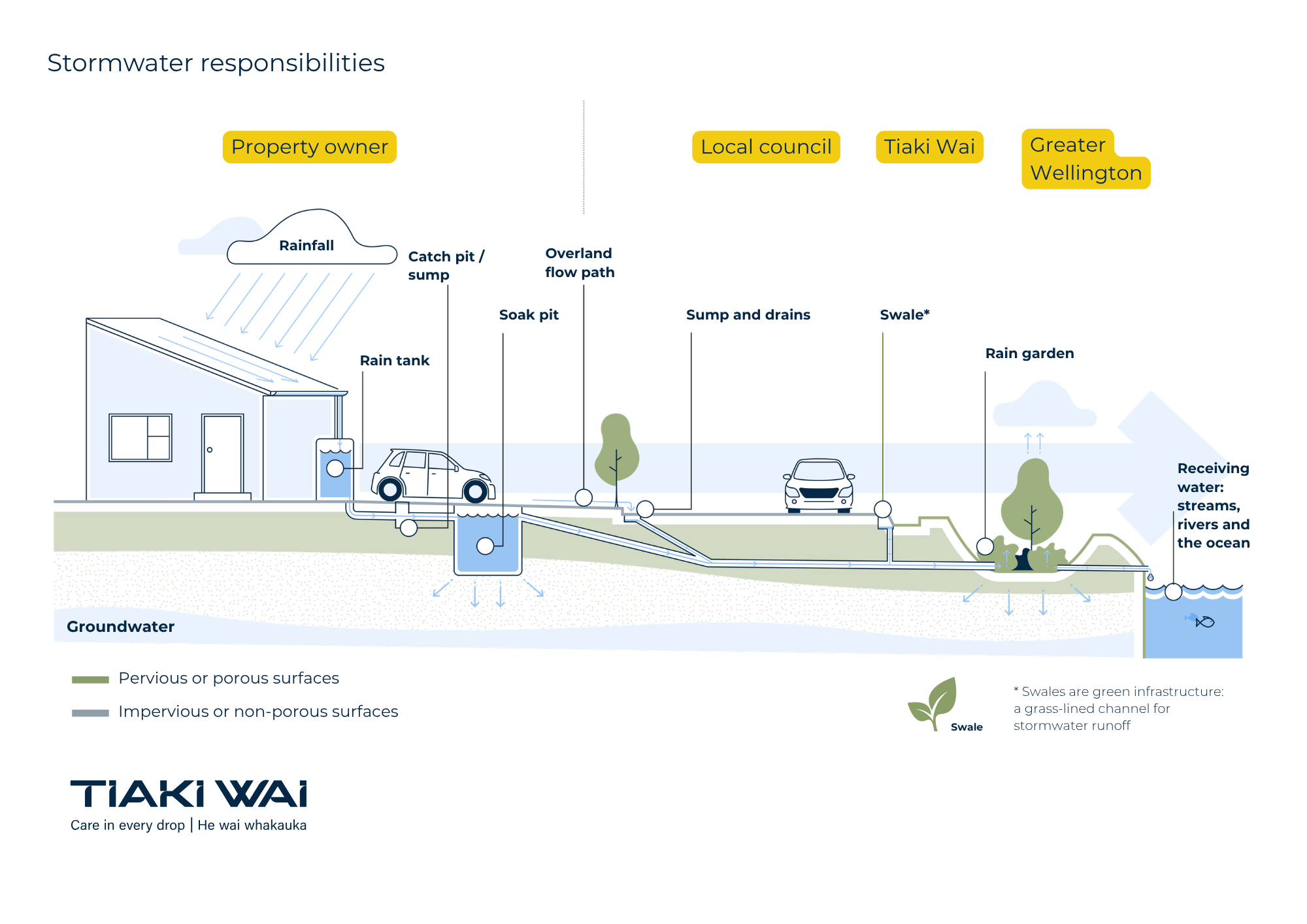
Management of the stormwater system is a shared responsibility between private property owners, local councils, Greater Wellington and Tiaki Wai.
Tiaki Wai is responsible for managing the piped network assets – such as stormwater pipes, channels, intakes, and outlets.
Local councils are responsible for road/kerbside drains, sumps, and culverts beneath roads with NZTA/Waka Kotahi responsible where the road is a state highway.
Greater Wellington Regional Council manages our rivers and major streams.
To help maintain the stormwater system, Tiaki Wai carries out regular inspections and work on the network’s assets, using cameras to investigate down pipes and clearing debris. Assets that have high-risk intakes are proactively checked ahead of events where advance warning is available. Flooding rarely occurs during normal rainfall due to a lack of stormwater network maintenance.
Private property owners/landowners are responsible for the management and maintenance of streams and watercourses passing through their property.
Managing streams and open drains
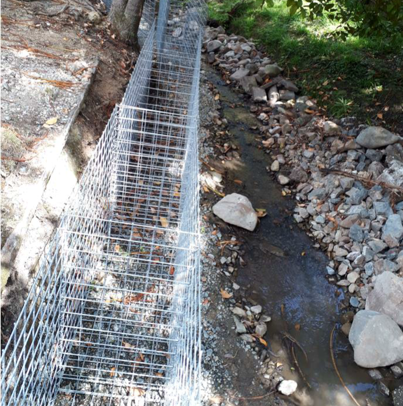 Streams and open drains are an important part of the stormwater network, carrying stormwater across public and private land to rivers and the coast. Keeping them clear and maintained helps reduce flood risk, protect property and support healthy waterways. Everyone has a role to play in maintaining our waterways.
Property owners are responsible for maintaining streams and open drains on their land. Tiaki Wai and councils work jointly to manage the stormwater network on public land.
Regular maintenance of streams, their banks and open drains helps reduce flood risk for your property.
Keeping waterways clear is a shared responsibility between property owners, councils and Tiaki Wai, including clearing debris after storm events.
What is the risk?
During heavy rain events the volume of water flowing through streams and open drains increases. If the flow of water is obstructed then flooding may occur.
Flooding not only increases the risk of damage to your property but also the land around your property as this may be become unstable and result in subsidence.
What can you do to protect yourself?
Remove any debris, overhanging branches, fallen trees or vegetation and clear away any bank collapses to ensure water can flow freely. This should be done regularly, including after storm events.
- Make sure any pollutants on your property cannot find their way into the steam or open drain. This is particularly important during heavy rain events.
- Any private structure that crosses the stream or open drain needs to be fixed securely to stop it breaking free and floating away during increased water flow.
- The natural route that water runs off your land is the “overland flow path”. Landscaping, buildings, sealed driveways and pathways all affect the flow of water through your property. Streams or open drains are best left open allowing water to flow freely.
- Please contact us if you are considering piping a stream or open drain on your property as we are more than happy to discuss this with you. However, this may not be permitted in some areas.
- Obtain sandbags and store them ready for use. Sandbags placed in strategic areas can help reduce potential flood risk.
- Regularly check your local weather information via Metservice and social media, and local radio stations to be aware of any weather events that may affect streams or open drains on your property. Pay particular attention to heavy, localised rain events. These are typically short, intense events that have the potential to result in flooding.